The day began with reading the news and meditation followed by chi building, light weights, a shower and breakfast. Language learning was next. Harry Potter in French, Urdu and Hindi. BBC Punjabi news and short stories for beginners in French and Spanish, a page each. On the commute to the first destination, I read Let’s Talk by Nihal Arthanayake, all about the art of conversation. I would finish the book during the day. My first finished book in a while as I am reading a few all together.
Sambourne House
A time capsule into the Victorian past with an overwhelmingly beautiful maximalist aesthetic. It was truly glorious to step into each room and look over the cherished family objects, many of them bought at auction and at bargain prices such as the chipped plates that were displayed on the wall. What added to the fascination was reading the room guides and learning how the family had acquired the objects and delving into their lives, how they truly lived on a day to day basis. For one house, there was so much to do.
The visit began with a video introduction to Linley the artist, the family and the house. The son Roy who had taken up the house was one of those boys that could not get on with education I noted, and had never managed to take the degree at Oxford.
The list of objects were intriguing. From the make do conservatory to the walking stick that had been manufactured from a crocodile spine, there was a glorious array. Roy’s room was full of photographs of actresses from the time, there were Linley’s cameras lying around, photographs of nudes, and a peculiar turtle shaped object near the fireplace which turned out to be a container for cigarettes.
At the end of the visit, as I was recircling the rooms, one of the volunteers came to speak with me alongside the fountain of all knowledge there who was called Stephen. We chatted about volunteering in these heritage sites and about some of the attractions around London.
Nigo Exhibition at the Design Museum
I went to this exhibition because I just happened to be in the area after Sambourne house. The story that they were telling about Nigo was that he wanted to rebel against the conformism in Japanese society. And therefore, he had gone to America and the west. As I pondered upon this tale, looking over his designs which I was not very partial to, all of the ugliest of American design copied out, I thought to myself why these non-Western people seem to think of the West as a revolution. All Nigo had done was to substitute Japanese conformism with American conformism. It was ridiculous. Yet they thought it was Revolution. Yes, it is Revolution to slavishly mimic the art and culture of the bullies in the world. To fawn over the powerful. Yes, that is the essence of Revolution.
I noted though, with a wry smile, that at the end of the exhibition, Nigo had become a Japanese tea master and learnt how to make Japanese porcelain in the old way. At least that was encouraging. He had gone to the west to rebel but had returned to his roots.
Japan House
After a lunch of reduced price sushi from Tesco’s, I had a quick look upstairs here as I had seen the exhibition downstairs about photography before. As usual, it was a delight to look over the tatami mats, the pearl jewellery, the wooden rings, the pottery and the dishes made out of lacquered wood, the stationery and the beautiful pens. To admire the Japanese infusion of art into everything that they do. I returned to the display about bamboo and reluctantly left the place.
The Whitechapel Gallery
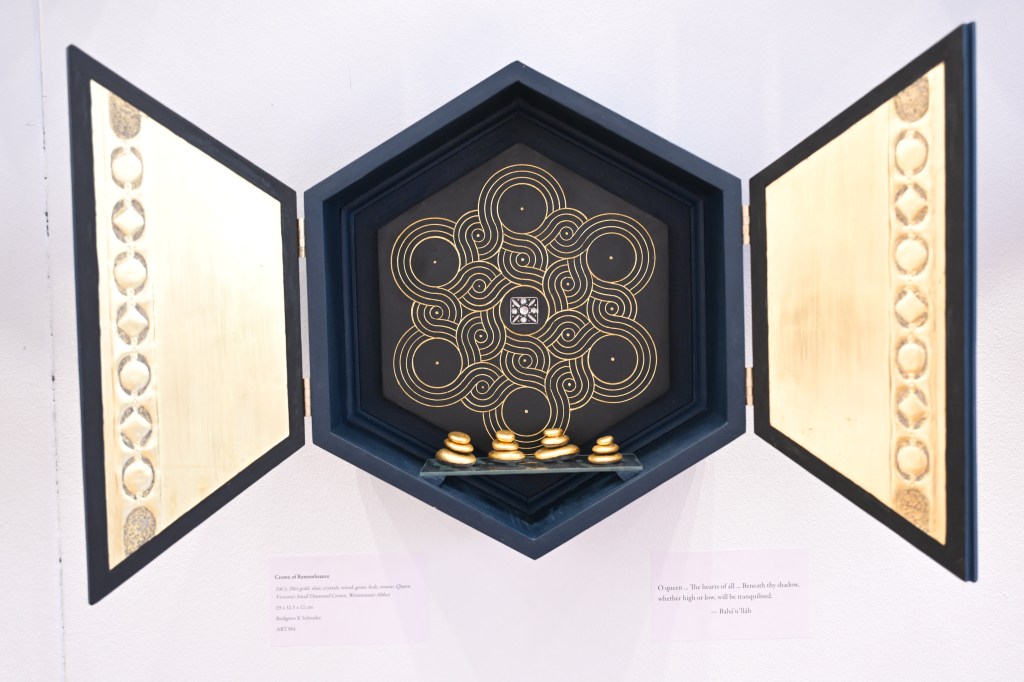
I met up with a friend and she and I investigated the ‘patchwork’ theme of the artworks downstairs, including a video of the bespoke suit industry, the contrast of Islamic carpet textiles inside with the British world outside in a series of photographs of windows (perhaps about the religious Islamic view of the world?) a gold and textile screen which hid a video and poetry about Chinese immigrants in Britain and also a video about Bengali muslin producers.
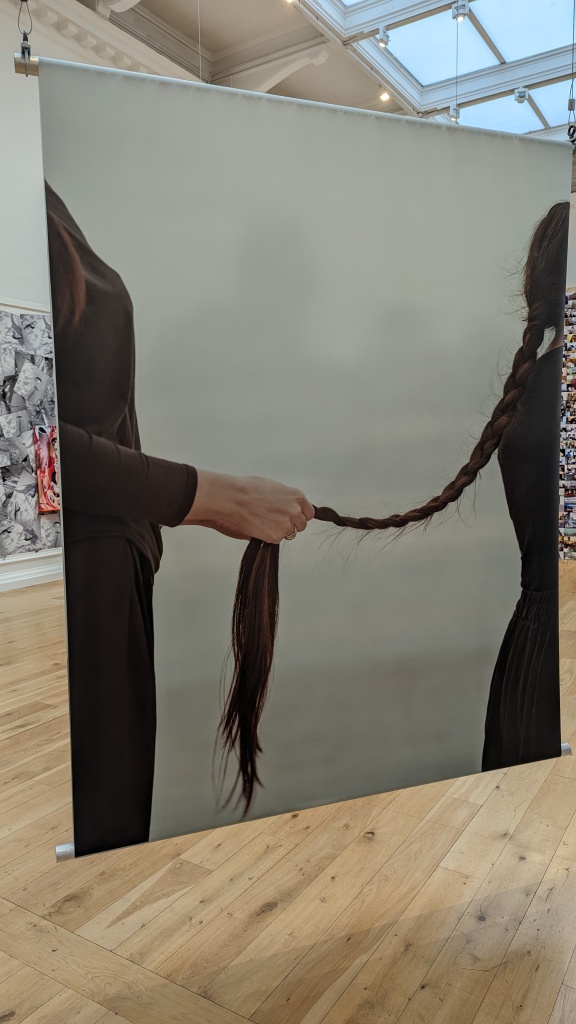
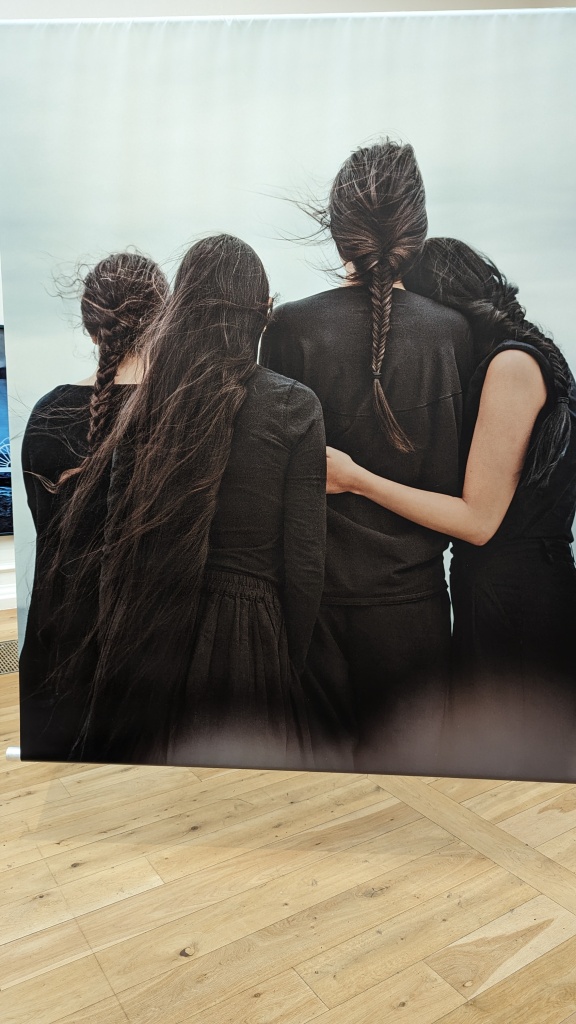
As we were down there, we were informed of a speech by Fozia Ismail about ‘A Song for the Xeedho’, about knot making from a Somali nomadic community of women. The speech was interesting and went on for about an hour. I saw the artwork as a reaction against Western art and its values. The art was communal, not individualistic. It was from a women’s tradition and not patriarchal. It was by nomads and not the settled. It was handicraft rather than fine art.
Upstairs, we saw some beautiful greenery made out of bronze and paint, saw an exhibition where you tasted Bengali food and then a video about Punjabi women in the fields talking about their life. We also saw the exhibition on the ‘OITIJ-JO Collective: TUFAN’. I took a series of photographs of my friend with the artworks throughout.
Items read today commuting to and fro from places:
New York Times
The Metro
The Financial Times
The Transalpine Gazette
The Red Bulletin
Music listened to today:
Batwara 1947 – The Movie Soundtrack
Nindiya Pari from Gandhi Talks
I finished off the day with wings, fries and a mountain chicken fillet burger at Chicken Cottage washed down with a tropical Pepsi. And a phone call with my girlfriend just before I got the tube back home at Liverpool Street.