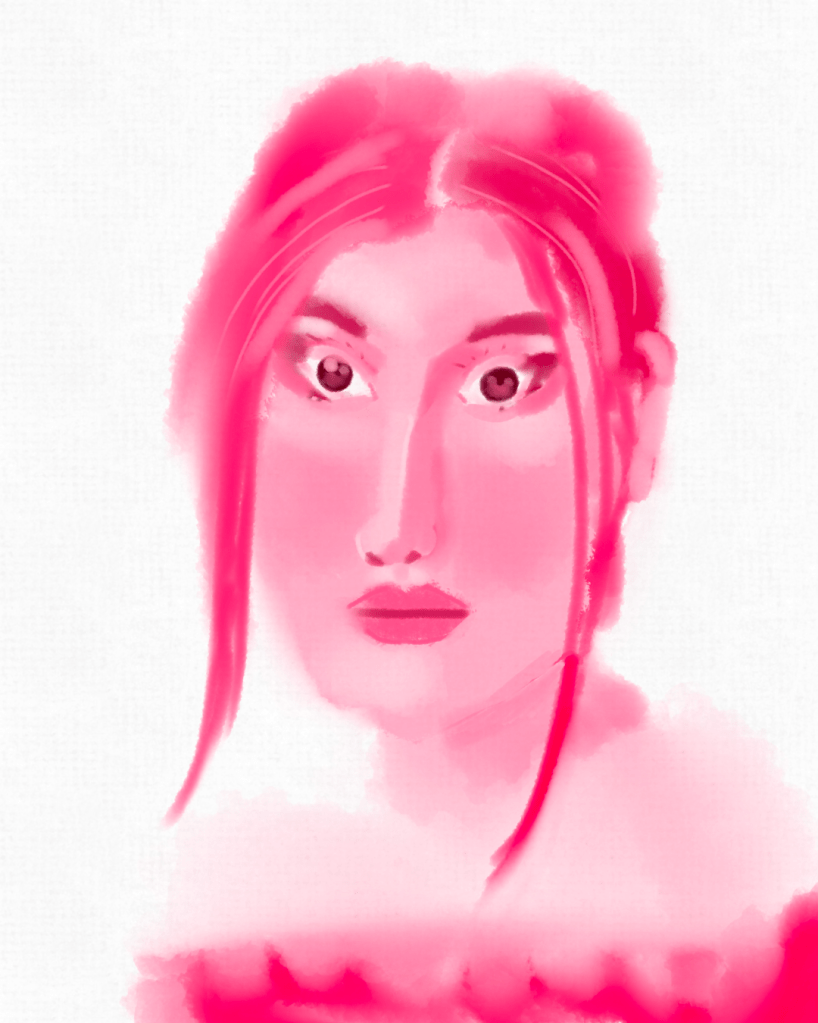
the saddest thing in the world (microfiction)

13.08.2025

‘What is the saddest thing in the world?’ Alfonso asked me. He looked sublime. The hot pink blazer, the perfect blue jeans. His handsome, handsome face and those piercing eyes. It was sad that I was only interested in the opposite sex. Because otherwise, he would have done very nicely.

‘Love.’

Alfonso stared at me with surprise. ‘You cannot be serious.’

‘It is a deadly serious answer. Love is what makes you sad. Do you not agree?’

Alfonso just looked at me. Then he changed tack. ‘Let us forget about your personal situations. Let me ask you instead when was the last time that you really wanted to cry? Don’t tell me that you can’t cry. We all know that now. But when did you last want to cry?’

‘I was on the tube. I was coming home. Then I read a passage in a novel that I was reading about how some youngsters stumble about when they have to tell a brother that her sister is dead. It reminded me of a situation that happened in my life. I had come home from wherever I was and I sat down to dinner. My grandmother had gone to a doctor’s appointment with my parents earlier in the day. I asked what had happened. My parents told me that nothing had happened. I then told them off for having such long faces if nothing had happened. I told them to be happy that there was nothing wrong with grandma. After dinner, when I had quite finished, my mother told me the truth. My grandmother was going to die from lung cancer.’

‘They hid it from you? Why?’

‘So that I did not spoil my dinner.’

‘They lied!’

‘My mother did it out of love for me. So that I could eat my dinner.’

‘And so you wanted to cry because what happened in the novel happened to you? Why didn’t you cry?’

‘I could have. I wanted to. Badly. But then I sneezed. And then I lost the will to cry.’

‘Saved by a sneeze.’ Alfonso sneered at me. He was prone to do it. ‘Would you have really blubbed in front of the other passengers on the tube?’

‘What would they care? Do you think it would even register on their radar? This brown man crying? Have you watched that movie? No one would even care if you died on the tube. Your corpse would probably ride on it for three days before anyone noticed and even then the only thing that would give it away would be the emerging stench.’

‘Do people tell you that you are cynical?’

‘Yes. They have asked me to change. But if my life cannot change, why would the way that I cope with it change? Don’t expect any happiness in life. Don’t expect any recognition or reward for fighting for the truth and knowledge, for dignity for your people and Mother India. Don’t expect love. Don’t expect anything that you deserve for being the best. Expect instead indignity, marginalisation, unfairness, stupidity, ignorance.’

‘One day, make yourself cry,’ said Alfonso. ‘But aside from that, be happy. You have a heart still. That is better than most.’ He looked at me. I sensed pity. What good does pity ever do anyone?

russian roulette

09.08.2025

At the most, I had twitched my lips as a prelude to a word. Essentially just the moment before the action. Alfonso raised his finger aloft and intoned, ‘Enough of your vileness about love. Perhaps one day…’

‘There is no now, there was no before and there will be no before me.’

‘That’s the positive kind of attitude!’ Alfonso smirked at me. ‘Stop wallowing in pity.’

‘It makes for a good bed.’

‘The bed is precisely what you have to free yourself from. Your late mornings have started again in earnest.’

‘Do you know what the dream is now, Alfonso? While I am awake, I see myself with a black pistol. It is very elegant and very beautiful. Irresistible. And I am sitting at the table with this little fiend. She is inviting me. I stroke her. I love her. It is a seduction that is hard to resist. And there is one pretty little bullet in this sexy little fiend. I open the gun and roll the barrel. Now, no one knows where the pretty little bullet is. Does it have my name on it like I have its name upon my heart? Who knows. I aim the sexy little fiend at my temple. There is an audience. They watch. They have thirsted for my blood from before I was born. I am what they have to kill to survive. Then…’

‘And then?’ asked Alfonso coolly.

‘That is the thing. At first, this waking dream was that it is all over. But then, do you know what my luck is? I have never been lucky in anything. This society is against my luck. Then, perhaps I get the bad luck. Perhaps I survive. Perhaps there is no big BANG.’

‘It is only a dream. You detest guns. You have told me that they are for cowards. It is against your culture to use a gun against yourself. The dream signifies nothing.’

‘Still, it is a pretty dream.’

‘Get a prettier dream. Put some flowers in it.’

‘The flowers are a tired metaphor and a false one. There is no romance. There is no beauty. There is no life principle against the death principle. There is nothing and no one in this world and there are no flowers.’

‘Pull yourself together,’ Alfonso admonished me. ‘You would let them win over you? You would accept defeat on their terms? In the world, there are flowers. You just have to find them.’

‘I have looked my whole life. Even the flowers are impure.’

‘Purity is a fiction. Hence so is impurity. It is the impure that are capable of holding power.’

‘An impure power or a pure powerlessness? What would you prefer?’

‘You want to bandy words around when you should be living life? Tomorrow you could be the happiest man in the world. Tomorrow, it might be impossible to prise the smile off your face.’

‘Who lives in tomorrow? We live in today. Today has always been foul.’

‘What is foul is your mood.’ suggested Alfonso. ‘Did not even the chocolate ice cream I gave you add a moment of joy to your day? Why did you eat it then? Remember,’ said Alfonso, ‘even the cat that gets the cream is not satisfied with its lot. Remember the Hindu philosophy: life is suffering, life is pain, life is a punishment.’

‘Some are punished more than others,’ I responded.

‘Even when you are sad, that troublesome tongue of yours looks to argue and to defy the world. One man cannot defy everyone else. One man cannot argue against the huddled voices of the world.’

‘Let me die in the attempt.’

‘There.’ Alfonso clapped his hands and a brilliant smile lit up his face. ‘Spoken at last like a man. Keep that wild mind in your head and that wild tongue in your mouth. Keep fighting. Die a noble death. Die fighting. You are the warrrior.’

I watched the smile on Alfonso’s face. What a curious thing a smile is. How do these people smile? And almost all the time? What do they have to be so happy about when there is no happiness in the world? Together, they had all decided to apportion happiness across the world. And when it had come to my share, they had decided to scrimp and save, so that I had almost nothing. I was teasing happiness and joy out of consuming scraps of chocolate, inhaling scented bars of soap and an insane clinging to the cultural evenings around London so that I almost was not sleeping any more.

And yet, there it sat. The smile. Alfonso’s belief in me that I would keep on fighting without any victory. Against all. The Indian man’s belief in The Tiger.

where can i go? (microfiction)

07.08.2025

Finally, after several years of not taking a holiday abroad, he had decided to go to foreign shores. However, nothing in life is easy, least of all a journey of ease. He did not know where to go.

His parents had not taken him on holidays abroad when he was a child. He had never booked a holiday abroad by himself or had the decision about where to go.

He lacked any kind of experience and he was stumped.

The first choice had been Japan. Beautiful Japan, the land of inspiration. But what was it that he was actually going to do there? He had a vague impression of nature and local traditions. But how was he going to organise everything?

The second idea was to take a coach trip around Europe and to cram in as much as possible. But then, how much did Europe interest him? Surely it would be pretty much the same as England?

The third idea was Athens. He had always wanted to go there. But then there was that association…

Athens could be had for about seven hundred pounds. A nice hotel with a swimming pool and breakfast. Plenty of archaeological curiosities out there.

Choices. The whole world to be had. And yet, every time he had tried to go abroad, all the plans had come crashing down around him.

There was nowhere to go. There was no place for him.

And at the same time, he could not rest where he was.

In the universe, we are a space. Our body is a space. A tiny little space in what is almost an infinity of space. And that space of the body relates to the spaces of the bodies around it. His space, his body, it had no relationship to the bodies around it. So it did not matter what country he went to or what he did, he would never have a human space around him. So why try? Why imagine being in a different human space? It was all very well saying that no man is an island. But an island he was. He would be an island in Japan, Europe, Athens or Africa. It was not what he wanted, but what he was.

This holiday was already stressing him out.

RHS Flower Show Thurs 4 July 2024 – Suneel’s Photographs

No one understands your heart. No one understands your words. No one understands your actions. But people think they understand your photographs.

The day:

  1. Bus into the Flower show: Three women my age from outside London came and sat next to me on the bus and started talking to me and joking around with me. Proving that everyone outside of London is still friendly.
  2. Walking around the place where they were selling all the flowers. An inspiring experience. People kept on complimenting me on my clothes – it was at least twenty people, mostly women. And the women gardeners all approached me and talked to me themselves. Women kept on talking to me all day.
  3. However, I had work to do (and what was I going to do talking to women that live outside of London?). It was a case of mixing pleasure with business. Or, rather, pleasure with pleasure. Because my obsession is writing. I went to all of the art stores because I write for a website about plant art. So I collected lots of contacts and got permission to use their artwork for the site. There is a huge amount of stuff to get through.
  4. I skipped lunch. I thought I could treat myself on my holiday to an expensive lunch. I am not used to luxury when that money could be used for something useful. I stayed hungry the whole day and survived off two chocolate bars and water (two Lindt chocolate bars for £1.80).
  5. Hampton Court Palace Gardens towards the end before one final push to get some good photographs inside again.
  6. I went on the Ferry back to the station to get a boat ride in. There was some miscommunication about a buoy a boat had ran into – a young girl thought it was a boy and not a buoy which everyone found amusing.
  7. I walked into town afterwards to look around and went into a last art gallery with a daughter and father duo of artists. He was a carver, she was a painter. I got permission from her to use her work and to write about it for the website.
  8. I was going to go straight home and eat but I ended up helping a sick person on the tube that was throwing up in the bins. It is my duty to help people – the philosophy of the religion I was raised in. No one else was helping him and he needed help. I ran to get someone even though they took their time to walk to him and get him assistance. I had to stay with him for a while.
  9. Which meant that I ended up eating a take out in London before I went home.

The Indian Vocabulary of Love and its Meaning

14.01.2024

I’ve been watching Hindi films since I was a child. It is how I learnt to speak Hindi (my language at home – my mother tongue – is Punjabi, not Hindi). Hindi speakers have many words for love. Not like English speakers. Here are some – Ishq, Aashiqi, Mohabbat, Pyaar, Prem, Lagan, Chaahat… There’s probably more. Hindi is a rich language.

Here are some more metaphorical ones, which touch on some of the ways that love is experienced and conceptualised in Indian culture:

Ibaadat – Worship. When you love someone, you love them like a god or a goddess. They are important, powerful, masterful over you. They rule over your heart. They take the place of a god or a goddess, commanding all your loyalty and faith. You trust them without question. You hope everything from them.

Aetbaar – Belief. When you trust them with your heart. You can rely on them without question. They are the one person in the whole world that you can count on the most to stay with you through thick and thin. You expect everything from them, total commitment.

Wafaa – They hold your loyalty. You will never stray from them. The trust and the bond between you is unshakeable.

Behosh/Mere hosh udhgayee – Unconscious/My senses have flown – How love is experienced. Your mind goes on a holiday when you see them, think about them, are around them. They command all your attention. You can’t focus on anything else.

Amaanat – They say that your lover (usually a woman) is your ‘amaanat’ (‘thing or property committed to the trust and care of a person or group of persons’ – https://rekhtadictionary.com/meaning-of-amaanat?lang=hi ) A red flag for Western feminists, but indicates the possessiveness that a lover will have over their sweetheart – and even in English, you still say to someone ‘You are mine’ or ‘You are my girlfriend’.

Here are some terms of endearment which further indicate what love means in Indian culture:

Jaanu/Janaam/Jaaneman – ‘My Life’. Love is for life. Your lover is your life. They are everything for you and they are for you forever, like your own life. They are precious like your life.

Mitwa/Yaar – ‘Friend’. Indian culture does not make a distinction between friendship and love between a man and a woman in this term. Which perhaps indicates the truth – that your lover is your best friend.

Humraaz – Someone who has the same secrets as you – you share your secrets with them. You trust them. They are the only ones you can share your most personal thoughts with.

Humnava/Humsafar – Someone who is a fellow traveller through life’s journey with you (the ‘ride or die’ chick). You are committed to the same journey. You have the same mission in life.

Humdum – Someone who has the same life force/breath (‘dum’) as you, your soulmate, someone who is the other part of yourself. The sense of connection, of seeing yourself in them.

Humdard – Someone who shares the same pain as you, because you are so connected. What you feel, they feel. They are the mirrors of you and you are the mirror of them (love’s mirror).

Huzoor – Master – they rule over you because you love them. And you accept their sovereignty over you.

Deewana – Crazy one – because you go crazy in love for someone.

See more terms of endearment from the Hindi movies here:

Abstract Love vs. Situated and Local Love

25.09.2018

The choice between abstract love and situated and local love is evident in a quote by E. M. Forster –

“I hate the idea of causes, and if I had to choose between betraying my country and betraying my friend, I hope I should have the guts to betray my country.”

Let us characterise abstract love. Abstract love is love of the country in the above quote or the supporting of “causes”, which are “public”, or, rather, “publicly accepted”. A “cause” can be defined as either a “charitable undertaking” or “a principle or movement militantly defended or supported” (Merriam-Webster Dictionary Online). Abstract love supports “principles” rather than human beings (the opposition is between friends and the abstract entities of country and cause). The country is an imaginary entity which is also largely publicly supported in the idea of abstract love. A country is largely an idea. It only has status as a piece of fiction. There is no such thing as a country. There is just a varied collection of people in a geographical space, who all live varied kinds of lives, not some kind of unchanging, abstract entity. Abstract love says that you should love all these people that you don’t know for whatever reason because of the abstract idea of a country and for abstract principles. Think about that in detail. There are no intimate human relationships required, no close contact with the recipients. In abstract love, the love that is most supported is the love of the stranger, of the anonymous. In abstract love, there is a morality which is that you should love a fictional idea more than you love those close to you: politicians tell you to love the country. This is felt like a compulsion by Forster who has to resist it strongly. What is the object of love in abstract love, the idea of the politicians? The country is seen as something larger than a single human being, as more universal. There is an idea of the larger versus the smaller, or the general versus the particular. The country is public, the individual is private. The country is emblematic of “good” group membership, community, etc. Love of the country is therefore contrasted to the love of the individual human being who just stands for personal love.

Let us now characterise situated and local love. In this form of love, you support individuals who you love. You know them. The reason that you love them is that you know them. You don’t love strangers and help them: it is those close to you that you love. This love is entirely intimate. It is situated because you just happened to be somehow connected to the person by complete chance. It is not about principles, it is about your own situated love. Biographical details are more important in this form of love than principles and sharing publicly accepted group affiliations. This love relies on an idea of the domestic sphere rather than the private sphere: you love those close to you, not those that political figures tell you to, as in the case of the country. It is about what you yourself choose to support as an individual. In situated and local love, you are not a removed and detached “objective” thinker with ideals of “universality” (abstract love pretends it is this – it is not, as you will know if you meet any nationalists). You are subjective. You favour the particular over the general, the smaller over the larger – the individual over the nation state. That is, you choose your own private group of membership (in friends) over what is publicly accepted as the main form of membership (nationality).

I have already said which love I choose. Why did I choose the smaller over the larger, the particularistic over the general? Because who else is going to help the poor members of my family in India? I have noted that they are systematically oppressed. Yet, for all the talk about altruism and abstract love, they have no support.

You might say that the abstract thinkers are in the minority and that is the problem with the world. After all, there is no one helping the people that are starving. But there is a morality to local and situated love. This is that you should tend to your own garden first before you start addressing other issues. First of all, my mother helps her family. Then, if she can, she helps people from our socially disadvantaged community on the basis of group identity. My mother is particularistic, not abstract and general. It is the same with the rest of our family. According to lovers of abstraction, this is seen as self-serving, selfish, etc. It is seen as a bad form of group identity and belonging (i.e. tribalism). It is seen as the inferior form of loving since it is situated. But the strength of situated and local love is that it is from insiders and local: who else is going to help anyone in that community that is outside that community? How many thousands of years of oppression have my people faced? No one helped us except our own. That is reality: people are selfish.      

Cat Psychology: Performing Strays in Abu Dhabi

26.11.2021

They slink away. They ignore you. They seem thoroughly unimpressed with your presence. This is the typical cat on the street in England.

Although I’ve never really been permitted to have a pet, I have done a bit of light reading on the subject of cat psychology, part of my general interest in our animal sisters and brothers and their minds. I used to try and blink at them on the streets as I understood this was a form of greeting with them. However, I never got much of a response. The English cat is highly anti-social.

However, compare the stray cat in Abu Dhabi with our native species. Once beloved pets, these animals had been callously left behind in the country when the ex-pats found their visas or their appetite for the country had run out.

These cats would follow me around, meowing pathetically for my attention. One would find them wandering around by themselves or in packs of five or six. They looked visibly malnourished, although kind people would leave out food for them. They would stare at me, with a deep longing in their eyes.

On one occasion, I found that one of these stray cats had ambushed a small family gathering in the park in front of the apartment I was at. It was actively performing for the delight of two young children. This black and white creature was playing dead, lying on its back with its paws up in the air, listening to the children’s squeals of delight.

These stray cats, once used to receiving human love and an audience, now craved an audience of humans. They would actively seek out an opportunity to perform and to receive some kind of acknowledgement from human beings. Those that had once given them food, shelter, nourishment, care, love.

The cat, seemingly so aloof in England, seems to be a slave of love, just as we are. This sheds light on a mammalian need for affection as well as the dynamics of inter-species connection. To me, the observation also suggests the roots of the need to perform for an audience. Perhaps, the performer is a being that has been starved of affection, or who has the greatest hunger for it. When the cat has companionship and the treasures that go with it, they don’t feel a need to perform for strangers. However, when this sense of society is gone, then an evolutionary instinct seems to kick in and drives the behaviour of the mammalian mind to seek out strangers, and with them, sympathy and the formation of potential relationships. Really, I think, our mind is controlled by our circumstances, especially our circumstances of love. And could this be what is foundational for all our cultural endeavours which seek to find affection from strangers, such as acting, painting, making music and writing?